This weekend I suffered not one but two apparent computer deaths. The most critical is that main system, where I have all my 2005 documents and all my issues of Prometheus, including the oh-so-nearly completed January issue. Backed-up? Not really. I had used my old external harddrive to back up another system that I recently migrated to OS X Tiger, and this drive was full. As hard drives continue to grow in size, I failed to keep up, and now I need to spend a couple of hundred bucks on a 200G external drive, hope my machine can get fixed, and make sure to schedule daily backups. My secondary system, now ca. five years hold, was pulled into duty, but today also failed. So far I have made no headway in bringing either machine back to life, and so I'm using a third option, my trusty PowerBook from work. I have to hope it makes it through the last minutes of 2005 without crapping out. Offers have been made to certain computer gods, but these are notoriously fickle.
All this means that the January issue of the Prometheus newsletter, instead of going to the printer next week, is at least a week delayed, and the four reviews I wrote last week will not be posted to this blog as planned, until I know I can get the data back. Worst case scenario means installing In Design on a borrowed machine and writing all the reviews again from scratch, which means at least a month's delay or more, something to which I do not look forward.
Mood: Grim.
Saturday, December 31, 2005


Sunday, December 25, 2005
Harald by David Friedman
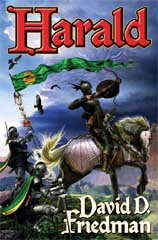
Harald is the debut fantasy novel from David Friedman, libertarian writer and author of The Machinery of Freedom. You can read an excerpt at BAEN Books, publishers of the hardcover edition, due April 2006.
Thursday, December 22, 2005
Adventurous fantasy/sf
I just finished reading a new novel from Scott Mackay, called Tides. Longer review completed and forthcoming in the January edition of Prometheus. This book details the adventures of a mariner driven to sail the vast and treacherous seas that surround his homeworld, in search of a possible other continent. A rollicking sea-tale that also examines clashing cultures, and questions the status quo of an apparent peaceful yet corrupt society.
Longer review completed and forthcoming in the January edition of Prometheus. This book details the adventures of a mariner driven to sail the vast and treacherous seas that surround his homeworld, in search of a possible other continent. A rollicking sea-tale that also examines clashing cultures, and questions the status quo of an apparent peaceful yet corrupt society.
In the mail
I received a copy of the American edition of Justina Robson's Silver Screen. Alas, the UK cover looks far cooler than the Pyr edition. I've just started the book, with plans to review it in neither the January or April edition of Prometheus. So far I am very impressed by the story and writing.
I've just started the book, with plans to review it in neither the January or April edition of Prometheus. So far I am very impressed by the story and writing.
Writer fined for 'Turkish insult'
Another writer fined for Turkish insult against the state. Zulkuf Kisanak's novel describes the forced evacuation of Turkish Kurds from their villages. How can Turkey expect to join the EU with these illiberal laws?
Resurrection of Liberty
I'm working on a long review for Prometheus, but if you like adventurous science fiction that takes you back to the days of Robert A. Heinlein, Michael L. Wentz's novelResurrection of Liberty is on sale for under $20. I really enjoyed this book, and highly recommend it. It's hard to beat this price for a nicely bound hardcover book, and would make a great gift to youngsters and adults alike.
Wednesday, December 21, 2005
L. Neil Smith's movie treat(ment)
Over the Libertarian Enterprise, novelist and Prometheus Award winner L. Neil Smith shares a movie treatment he wrote called TimePeeper. Written in the 1980s, it's an interesting addition to Smith's North American Confederacy universe.
Monday, December 19, 2005
Master and Margarita to debut as TV movie in Russia
The New York Times writes about a nearly nine hour TV movie version of a superb Russian novel, Mikhail Bulgakov's Master and Margarita. "For the Soviet or Russian person, meeting with Bulgakov's novel in 1966 was a taste of freedom," states the director. The book can be read on many levels, one of which details how people "disappear" into the basements of the KGB. Other elements are more fantastic, such as the Devil setting up shop in Moscow. The novel is a hallmark of wit and elebance, but devilishly difficult to adapt to the screen. I seriously hope this gats translated and shown outside Russia one day.
Thursday, December 15, 2005
Turkish novelist on trial for speech
I heard about the case of Orhan Pamuk's trial on NPR driving home today. The trial begins on December 16. Here is a country's most famous novelist on trial for saying something that insults the national character. Apparently, by discussing the verboten subject of over one million alleged Armenian deaths in Turkey in 1915, Pamuk stepped on the toes of Turkish national honor. It's a shame that so many of his countryfolk hate him for daring to speak his mind, but Turkish children are taught at an early age to venerate all things Turkish, and that means no criticism of the government view. Whether or not one million Armenians died should be investigated fully, not swept under the carpet.
Tuesday, December 13, 2005
V for Vendetta teaser

Wally Conger passes on some positive comments from a pre-screening report of V for Vendatta in Austin, Texas recently. Interestingly, the guys at Ain't It Cool News, which posted the comments, wrote early on about disturbing changes to the script. Either the movie changed, or the opinions did, but regardless this does appear positive. The posters are superb.
Monday, December 12, 2005
I'll buy one of these
The death of book publishing? Perhaps. Certainly the device mentioned in this article makes the case well, and merges more than just a book reader into the package. Imagine curling up on a sofa reading a favorite author while listening to music from the same small gadget. Oh yeah!
Historical fiction and liberty
Edward Cline's Sparrowhawk books seem like a compelling series. Book five now available via Laissez Faire Books.
Sunday, December 11, 2005
Can't wait
F. Paul Wilson's new Repairman Jack novel, Harbingers, inches closer to publication. Gauntlet Press released a teaser page with the book cover, a stunning work of art. They begin taking orders on January 1, 2006, and their limited edition probably will sell out before the publication date of June. Mass market hardcover follows later in the year, but hard-core fans will want their copy early.
Wednesday, December 07, 2005
Regional literature
Over at lewrockwell.com, a libertarian site that also at times embraces confederacy southron culture and its implied racism and agrarian aristocracy, Gail Jarvis present a Christmas list of southern American fiction.
Meanwhile, a different sort of culture emerges in Tom Palmer's reading of Ole Edvart Rølvaag’s novel Giants of the Earth. According to Palmer, Giants in the Earth "is about accomplishment, rivalry (of various sorts), the joy of productive work, family, love, religion, common sense, and, above all else, striving."
All this is a far cry from the so-called Southern scenario, where on a frivolous level "beautiful women [are] eagerly sought after by men," and "young Southern aristocrats [try] to win the affection of their true loves during Charleston’s holiday season." Also discussed are more serious issues in the "agrarian South" of " conflicts arising when urbanism creeps into rural communities," and where there are "strange yet kindly master[s]."
Both Rølvang and the southern authors mentioned by Jarvis deal with non-urban settings, but in terms of cultural ideas it seems you have to look to a Norwegian to express the ideas of true American values. Jarvis fails to mention my all-time favorite novel, and a book written by a person from the south Harper Lee's To Kill a Mockingbird. Perhaps this book is too famous, or contains the wrong values, as Jarvis seeks to highlight works that "avoid the stereotypical Hollywood clichés about the region."
Meanwhile, a different sort of culture emerges in Tom Palmer's reading of Ole Edvart Rølvaag’s novel Giants of the Earth. According to Palmer, Giants in the Earth "is about accomplishment, rivalry (of various sorts), the joy of productive work, family, love, religion, common sense, and, above all else, striving."
All this is a far cry from the so-called Southern scenario, where on a frivolous level "beautiful women [are] eagerly sought after by men," and "young Southern aristocrats [try] to win the affection of their true loves during Charleston’s holiday season." Also discussed are more serious issues in the "agrarian South" of " conflicts arising when urbanism creeps into rural communities," and where there are "strange yet kindly master[s]."
Both Rølvang and the southern authors mentioned by Jarvis deal with non-urban settings, but in terms of cultural ideas it seems you have to look to a Norwegian to express the ideas of true American values. Jarvis fails to mention my all-time favorite novel, and a book written by a person from the south Harper Lee's To Kill a Mockingbird. Perhaps this book is too famous, or contains the wrong values, as Jarvis seeks to highlight works that "avoid the stereotypical Hollywood clichés about the region."
Catastrophes, Chaos & Convolutions
Available now, the latest James Hogan collection. I'm hoping to review this in the January edition of Prometheus, but I'm behind already on writing some other reviews, so it might be later.
. I'm hoping to review this in the January edition of Prometheus, but I'm behind already on writing some other reviews, so it might be later.
Friday, December 02, 2005
Rudyard Kipling Invented SF!
Eric S. Raymond is spurred to further reading on Kipling by a comment on his essay that I reprinted in Prometheus. I have to admit that it's been a long time since I read Kipling, and then it mostly was his Indian tales. I've pulled down my Kipling sf collection and hope to read the stories again, given the comments by both Raymond and William Stoddard, who caused Raymond to re-think some of the ideas in his original essay.
Wednesday, November 30, 2005
Calling card
I'm travelling this week, hence the lack of posts. I had hoped to post a couple of book reviews, but these are still in process. In the meantime, as I'm sorting through my luggage preparing for my return flight, I notice a strange card. It appears the Transportation Security Aministration's minions opened my checked in luggage, pawed through the contents, and left me a card explaining what they did. There's no indication why, although I did put part of my keychain in this bag, since it includes a tiny Swiss Army knife, and I did not want it confiscated. Next time I'll leave that implement in the car, and carry the extra luggage on the plane. And I used to like airports and flying. No more. I'm tired of the long lines, the bored yet superior attitude of the screeners, and the waste and fraud the accompany any federalized operation.
Monday, November 28, 2005
Ayn Rand and sf
Roderick T. Long relates a personal search for an elusive memory of an article on Ayn Rand and science fiction in an old issue of Starlog. The issue in question, #22, May 1979 contains an article on the science fiction of Ayn Rand, especially Anthem and Atlas Shrugged, and includes a Boris Vallejo painting of the John Galt torture scene from the latter novel. The link in Long's article about a movie adaptation of Anthem takes the surfer to an article from early 2004. Posted by Rand scholar Chris Sciabarra this story talks about former Starlog publisher Kerry O'Quinn acquiring the movie rights to Anthem. I personally think the book would better be adapted as a graphic novel or animated movie, filmed purely in black and white. Still, Rand fans whose interest is piqued by this story may drive the price of that 26 year old issue of Starlog.
Tuesday, November 22, 2005
Book received: John Meaney

Next week I'm hoping to complete three long book reviews for Prometheus, the newsletter that I edit. Lo and behold, Pyr books drops a large, heavy volume at my doorstep, which I look forward to reading but will have to wait until those prior obligations are finished. John Meaney's Context
looks quite interesting. In interview at SF Site from 2002, conducted by Lou Anders, British sf writer Meaney talks about his novel. There's a dark force rising throughout Nulapeiron, known as the Blight, or the Dark Fire. It subsumes human beings, makes them insignificant components of a vast whole: an entity which bears the same relationship to a single human being as a person does to a bacterium. From small beginnings, realms undergo strange societal changes, until they become part of the Blight-occupied territories.
The US publication date is 2005. It's book two of a series, but the author promises each will work as a stand-alone book. Fantastic over painting by Jim Burns. More to follow...
Harry Potter and the Half-Crazed Bureaucracy
Via Liberty and Power, a link to an abstract of an essay by Benjamin Barton on the implied libertarian critique of government in J. K. Rowling's Harry Potter novels.
I ventured reluctantly into the world on Harry Potter only after the third novel saw publication in paperback, but I quickly became a fan. The seven-novel saga (one book remains to be written) sketches a rich world as young Harry grows to adulthood, cursed to be different in many ways. He's a wizard, an orphan, abused by his adoptive family, feared and misunderstood by fellow wizards, and fated to face the most dangerous wizard ever born. I noticed early on the strong antipathy towards government and its minions in Rowling's books, especially book five. Yet also the man-hunt for Sirius Black and revelations into the way the Ministry of Magic dealt with wizards after Voldemort's "death" highlighted the corruption of those in power. Several of Voldemort's allies received government positions, influencing the direction of the Ministry. For an alleged children's series, Harry Potter is layered with multiple meanings far beyond the perceptions of a young audience. Rowling writes with this in mind, resulting in the series' popularity with adults as well.
The critique is even more devastating because the governmental actors and actions in the book look and feel so authentic and familiar. Cornelius Fudge, the original Minister of Magic, perfectly fits our notion of a bumbling politician just trying to hang onto his job. Delores Umbridge is the classic small-minded bureaucrat who only cares about rules, discipline, and her own power. Rufus Scrimgeour is a George Bush-like war leader, inspiring confidence through his steely resolve. The Ministry itself is made up of various sub-ministries with goofy names (e.g., The Goblin Liaison Office or the Ludicrous Patents Office) enforcing silly sounding regulations (e.g., The Decree for the Treatment of Non-Wizard Part-Humans or The Decree for the Reasonable Restriction of Underage Sorcery). These descriptions of government jibe with our own sarcastic views of bureaucracy and bureaucrats: bureaucrats tend to be amusing characters that propagate and enforce laws of limited utility with unwieldy names. When you combine the light-hearted satire with the above list of government activities, however, Rowling's critique of government becomes substantially darker and more powerful.
I ventured reluctantly into the world on Harry Potter only after the third novel saw publication in paperback, but I quickly became a fan. The seven-novel saga (one book remains to be written) sketches a rich world as young Harry grows to adulthood, cursed to be different in many ways. He's a wizard, an orphan, abused by his adoptive family, feared and misunderstood by fellow wizards, and fated to face the most dangerous wizard ever born. I noticed early on the strong antipathy towards government and its minions in Rowling's books, especially book five. Yet also the man-hunt for Sirius Black and revelations into the way the Ministry of Magic dealt with wizards after Voldemort's "death" highlighted the corruption of those in power. Several of Voldemort's allies received government positions, influencing the direction of the Ministry. For an alleged children's series, Harry Potter is layered with multiple meanings far beyond the perceptions of a young audience. Rowling writes with this in mind, resulting in the series' popularity with adults as well.
Thursday, November 17, 2005
The Prisoner 'set for TV return'
BBC reports that Sky One is planning a new series inspired by the Prisoner. Although the themes of conspiracy and paranoia will remain, the setting will differ, and the show would take other "liberties" with the original. In 2002 the Libertarian Futurist Society recognized The Prisoner with a Prometheus Award for a classic work of liberty. The entire 17 show series is available in a nicely packaged DVD set.
Wednesday, November 16, 2005
More reasons to avoid Sony CDs
This story adds a level to Sony's sly metthod of loading various DRM software on user PC. All this focus on Sony does make me wonder what other companies are up to? Lately all the discussion has been about piracy and methods to protect intellectual rights, but subverting the customer's computer system seems like a risky path, in my opinion. There are legal implications in Sony's method, but more importantly, your computer and privacy end up compromised. The key is to simply avoid all infected CDs. Quarantine them. Ignore them. This won't be the last we hear from Sony, nor the last attempt at intrusive DRM in CDs and DVDs.
Sunday, November 13, 2005
Infected Sony CDs
From EFF, a list of Sony CDs with draconian copy protection keyed to infect and in some cases disable your computer (and liberty). Good thing none of these bands are on my list, but in addition, some photos of how to detect these CDs, and also how to disable the XCP software.
Friday, November 11, 2005
Vernor Vinge on Accelerating Change
Vinge's keynote address from Accelerating Change 2005 is available as an MP3 download. Recorded 9/17/05, the speech runs around 40 minutes. Very interesting stuff, and quite timely in terms of my discovery of this, as I'm currently working on a review of Ray Kurtzweil's non-fiction book, The Singularity is Near.
.
RebelFire review
Chris Hibbert reviews Prometheus Award nominated novel, RebelFire: Out of the Gray Zone. Perhaps too many spoilers in the second-to-last paragraph, but overall a positive review.
Jumper adapted for screen
Sci Fi Wire reports on the announcement that Steve Gould's novel, Jumper, will be adapted for the big screen. "Fight Club writer Jim Uhls will rewrite a script by David S. Goyer (TV's Threshold). Production will begin in the spring."
Malware taking advantage of Sony DRM
Indeed. This did not take long. Sony rootkit tehcnology opens the door to hackers.
Sony reaches out to Macs with DRM?
In a previous post I mentioned the DRM that Sony installs on Windows PC. Now it appears Sony CDs also account for Mac OS X and installs some form of copy-protection. Now, I'm against piracy, but this move is not the right way to go, in my opinion.
Wednesday, November 09, 2005
Movie-plexes as minions of the MPAA
Via Claire Wolfe's blog, a link to a story about MPAA thuggery at a movie-plex. The author seems to think "movie studios are losing revenue because of the increasingly poor movie-going experience and general low-quality of the movies they are making." Perhaps. In my case, I hate rude fellow patrons, and inevitably I have people right behind me talking through the movie. That makes me prefer viewing a DVD at home. The last movie I saw, Wallace & Gromit and the Curse of the Were-Rabbit, was a matinee. As the lights dimmed, I seemed to be the only person in the theatre. But then, a moment later, two older women hobble in, both talking. They proceeded to talk through-out the entire movie, despite loud comments and muttered curses from me, thereby ruining the movie. Yes, I probably could have alerted the manager, but would that have stopped them/ probably only for a few minutes, and I would have lost screen-time in the time it would have taken to find a person. No, I prefer to watch the movie on my own time, at home, although the screen is smaller, and I have to keep the volume down to not wake the infant.
Monday, November 07, 2005
Nefarious Sony deserves boycott
From CNET News, an article about SonyBMG loading spyware on your PC. Turns out some copy protected CDs, such as Van Zant's Get Right with the Man, will implant a copy-prevention utility on your Windows PC. I use a Mac, but just the same, once you buy a CD you should be able to copy this for you own use without any restrictions. Amazon does warn buyers: [CONTENT/COPY-PROTECTED CD]. I'm going to think twice before purchasing any SongBMG product from now on.
Sunday, November 06, 2005
The only Bush I like
Chalk this entry under Personal, of little interest to liberty per se. Kate Bush releases Aerial, her first new album in 12 years. A noted perfectionist, Bush released the album on her own schedule, and bowed to no one. She's a far cry from manufactured artists and media vampires. Three cheers from this fan.
Tuesday, November 01, 2005
2006 - the year of Vernor Vinge?
Not only will sf writer Vernor Vinge's latest novel appear in early 2006, but at least one of his long out of print books will see light again. Tatja Grimm's World appears on Tor's schedule for January, 2006 with a gorgeous cover. (I tried uploading just the cover but ran into Blogger errors, so here's the closest thing I could manage.)
appears on Tor's schedule for January, 2006 with a gorgeous cover. (I tried uploading just the cover but ran into Blogger errors, so here's the closest thing I could manage.)Monday, October 31, 2005
LRC Bestseller List - two Prometheus Award nominees
The Lew Rockwell Center posts a bestseller list compiled from Amazon.com referral sales, and two Prometheus Award nominated novels made the list. A third novel, John Twelve Hawks' The Traveler, was reviewed in the Fall 2005 issue of Prometheus. The two Prometheus Award nominees? Claire Wolfe and Aaron Zelman's Rebelfire at No. 3, and Vin Suprynowicz's The Black Arrow at No. 13. (See list below for current list of nominees.)
was reviewed in the Fall 2005 issue of Prometheus. The two Prometheus Award nominees? Claire Wolfe and Aaron Zelman's Rebelfire at No. 3, and Vin Suprynowicz's The Black Arrow at No. 13. (See list below for current list of nominees.)
Sunday, October 30, 2005
I Must Speak Out now online
Since 1986 I have subscribed to Carl Watner's The Voluntaryist. I own every published issue of this fine publication, which I find to be the most consistent form of libertarianism ever expressed. A short while ago Watner published a "best of" book entitled I Must Speak Out, an anthology containing 70 essays from the first 100 issues. This book now is available online as a free PDF download. I highly recommend spending a few minutes of your time reading this book. You might agree or disagree with the premises and conclusions of Voluntaryism, yet also I believe you'll be intellectually challenged.
Thursday, October 27, 2005
Right wing movies
Previously I mentioned the Liberty Film Festival. Jesse Walker of Reason magazine actually attended the events, and details his experiences here. As I expected, rather than deal with pro-liberty issues, Hollywood's Conservative Film Festival (as it called itself) is more about taking on the left, especially Michael Moore and anti-war ideas. As Walker muses, "If these movies represent contemporary conservatism, then conservatism today has little room for libertarian ideas." An excellent article that covers many of the films from the festival.
Death Is Easy - novel
From Russel Madden, a detective story set in a world where liberty is taken for granted. Yet, "Even in a fully free society danger abounds." The novel is published through Lulu, which was founded by Bob Young, co-founder of open source company Red Hat, and touts itself as "the web's premier independent publishing marketplace for digital do-it-yourselfers." Death is Easy is available as print paperback and download, with a 51 page PDF preview. Support libertarian fiction and check it out.
Preliminary 2006 Prometheus Award nominees
Two writers have already made mention of their book being nominated for the 2006 Prometheus Award. Below is a preliminary list of the current nominees. Additional books are still being considered, and in early 2006 this list will be whittled down by a judges panel to five finalists. As of August 25, eight novels have been nominated for the 2006 Best Novel category. This is by no means the final list, but since I printed this list in the fall issue of Prometheus, I wanted to make it available online as well, with links to Amazon for those who wish to buy (or read more about) the books.
Chainfire, by Terry Goodkind (TOR Books)
Reflex, by Stephen Gould (TOR Books)
Noble Vision, by Gen LaGreca (Winged Victory Press)
The Black Arrow, by Vin Suprynowicz (Mountain Media)
Accelerando, by Charles Stross (Ace/Putnam Books)
Infernal, by F. Paul Wilson (Forge Books)
RebelFire: Out of the Gray Zone, by Claire Wolfe & Aaron Zelman (RebelFirePress)
The Mists of Everness, by John C. Wright (TOR Books)
Chainfire
, by Terry Goodkind (TOR Books)Reflex
, by Stephen Gould (TOR Books)Noble Vision
, by Gen LaGreca (Winged Victory Press)The Black Arrow
, by Vin Suprynowicz (Mountain Media)Accelerando
, by Charles Stross (Ace/Putnam Books)Infernal
, by F. Paul Wilson (Forge Books)RebelFire: Out of the Gray Zone
, by Claire Wolfe & Aaron Zelman (RebelFirePress)The Mists of Everness
, by John C. Wright (TOR Books)
Tuesday, October 25, 2005
RIP Originality in the Movies
Sad news about more regurgitated retreads. A four 'page' store from ABC News on sequelitis in Hollywood, throwing in the opening tidbit that Sylvester Stallone's last three movies all were Direct to DVD dreck like Avenging Angelo, Shade and D-Tox (originally titled Eye On You). A far cry from inspiring Henry Winkler's Fonzie in The Lords of Flatbush, and the original "Rocky" and "Rambo" movies. Old Sly is far from alone, as in the bottom-line corner, weighing in at there-must-be-profits-here-somewhere, we find planned sequels to Die Hard, Terminator, Basic Instinct and Indiana Jones. Now three of these are "IV," and Basic Instinct only looks ahead to number two, but come on. Hasn't the story in each case been told enough? Move on to something new. There's still great original unfilmed books out there, but we see are sequels and re-makes. How about Probability Broach, the movie? Or The Stress of Her Regard? Two very different yet quite worthy ideas, and the latter even has vampires! As always, the lure of money trumps any statement by former stars to never appear in sequels. And enough people will rent or buy the DVDs to make them profitable, so get ready for a whole host of remakes and sequels for a very long time.
Wednesday, October 19, 2005
From the ashes of iFeminsts
Wendy McElroy shuts down one forum and launches another, broader forum. Some of the topics of interest include "Entertainment," which is sure to bring up books and movies related to liberty.
Chinese anarchist writer
Via Liberty and Power.
An enticing obituary of Ba Jin, dead at the age of 100, who once wrote "Never for a moment will I put down my pen. It is kindling a fire within me." Taking his name from Bakunin and Kropotkin, Ba Jin fell victim to the Cultural Revolution, of which he said, "Where else have authors in the world throughout history gone through something so terrifying and ridiculous, so bizarre and agonizing?" There's a ripe history barely hinted at in this article, that I hope some modern Chinese anarchists will pick up and publish.
An enticing obituary of Ba Jin, dead at the age of 100, who once wrote "Never for a moment will I put down my pen. It is kindling a fire within me." Taking his name from Bakunin and Kropotkin, Ba Jin fell victim to the Cultural Revolution, of which he said, "Where else have authors in the world throughout history gone through something so terrifying and ridiculous, so bizarre and agonizing?" There's a ripe history barely hinted at in this article, that I hope some modern Chinese anarchists will pick up and publish.
Tuesday, October 18, 2005
Karl Hess Club blog
J. Neil Schulman Thomas M. Sipos have started blog based on the log-running Karl Hess Club dinner discussions (see link to the right on this page). So far the most interesting post (in my opinion) dealt with copyright.
Monday, October 17, 2005
Linaweaver's Der Krapp columns online
Under the premise of finding something good to say about the worst movies ever made, Brad Linaweaver penned 17 entries under the column name "Der Krapp." Now online at Big Lizards, this is sure to feed some Netflix queues. Or not.
Saturday, October 15, 2005
Announcing Roswell, Texas
Scott Bieser posts hot news about L. Neil Smith and Rex F. May's new novel, Roswell, Texas, to be published as a graphic novel as web-installments, and possibly a print version if there's enough market demand. The premise certainly is enticing...
Imagine a world in which Texas never joined the United States, NAZI Germany conquered England but was held in check by a nuclear-armed Irish Republican Army, the Catholic Church has moved its headquarters to Brownsville, Texas, and Mexico is ruled by a neo-Aztec emperor in partnership with French colonial bureaucrats-in-exile.
In this Texas-that-might-have-been, residents are required to have permits not to carry firearms. The Federated States of Texas includes most of what we know as New Mexico and Colorado, as well as Louisiana, Arkansas, Oklahoma, Kansas, parts of Wyoming, Nebraska, and Missouri. Not to mention Alaska, Cuba, Venezuela, most of Central America, and the Phillippines. Its currency is based on petroleum, and its limited government is financed entirely by a monopoly on garbage collection.
And in 1947, Texican President Charles A. Lindbergh was faced with a most amazing, and potentially world-changing, situation — reports of a flying saucer crash in far west Texas, near the town of Roswell.
Friday, October 14, 2005
Dark is the Might
NY Times reports on the effort to "recalibrate" comic book heroes like Superman, Batman, and Wonder Woman for "a grittier century." Damn, and I thought the last century was gritty. What do they know that we don't?
Thursday, October 13, 2005
Conger on Barsoom
Wally Conger mentioned recently at his blog, out of step, news about Edgar Rice Burroughs' John Carter of Mars novels coming to the big screen. I grew up reading ERB's books on Tarzan, Venus, Mars, and Pellucidar, lending credence to the statement that the Golden Age of science fiction is twelve. (Personally, the Pellucidar novels were my favorites, under the Ace imprint from the 1970s.) I am somewhat leery of this cinematic effort, though. One fascinating tidbit I take away from director Jon Favreau's interview linked at out of step is the fact it's taken 75 years to get this close, and the script isn't even ready yet! Much easier for Tarzan, which arrived in cinemas almost before the print dried.
Pinter Wins Nobel Prize in Literature
An interesting choice for this year's Nobel Prize. I was not aware of Harold Pinter's poetry as much as his plays, nor his recent political stance against the Iraq Invasion. Julian Sanchez over at Reason Hit and Run seems more amused by the fact that Pinter was born in Hackney, although this bio mentions Pinter's recent anti-war book of poetry, as well as this interesting quote: "Pinter's early fascination with politics was also evident in The Hothouse (1980), a bilious black comedy set in a state-run hospital in which nonconformists are classified as mental patients. Written in 1958, it was never publicly performed till 1980." In a subsequent sentence, however, it just seems like Pinter copies Henrik Ibsen's play, The Wild Duck, in discussing The Caretaker, which is "about power and pipe dreams: about the desire for domination and about the human need for illusions." The Nobel Price tends to result in an upsurge of sales for the winner, and often puzzlement at the selection by critics. Earlier this week the Nobel Prize for literature received another type of attention when a judge denounced last year's selection and quit the panel.
UPDATE: Just read a comment over at Libertarian Samizdata calling Pinter an apologist for Slobodan Milosevic, "Europe's most prolific socialist mass murderer since Joseph Stalin." Pinter else has been ridiculed as a "Champagne Socialist" and hypocrite for declining a knighthood by a conservative government and accepting state honors from a social democractic one. Perhaps this award is a good thing after all, as it will shine the light of truth on its recipients.
UPDATE: Just read a comment over at Libertarian Samizdata calling Pinter an apologist for Slobodan Milosevic, "Europe's most prolific socialist mass murderer since Joseph Stalin." Pinter else has been ridiculed as a "Champagne Socialist" and hypocrite for declining a knighthood by a conservative government and accepting state honors from a social democractic one. Perhaps this award is a good thing after all, as it will shine the light of truth on its recipients.
Wednesday, October 12, 2005
Serenity in 2000 Words or Less
Can't help myself. This is too damn funny. (But don't click unless you've seen the movie.)
Collateral Damage in the Culture Wars
Conservatives must have relaxed the drug laws slightly to come to this conclusion, that penguins somehow represent conservative values. Earlier in the Fall, the New York Times also mused on the rise of conservative movies, wondering whether a few recent movies viewed as having conservative values should be "interpreted as peace offerings in the culture wars, or as canny attempts to open a new front in the endless battle for the soul of the American public?" Since most American media members see the world as liberal and everything-not-liberal-as-conservative, lumping The Incredibles as a "conservative" movie demonstrates a Procrustian worldview. And yet, there is a conservative movement out there, far-reaching and ambitious, that could co-opt or take down libertarian ideas entirely in the public's mind. Witness Libertas, which throws around the word "liberty," yet also advertises itself as a "forum for conservative though on film." No wonder the modern left sees libertarians as part of the conservative movement: no one talks liberty as much and loudly as the conservatives, while trampling gleefully on individual freedom at the same time.
Tuesday, October 11, 2005
3000 Years
Today I received in a mail a copy of 3000 Years, a novel by Richard Mgrdechian published this year. I plan on digging into the book right away, posting a brief review here, and then probably a longer review in the print edition of Prometheus in a few months - yes, hard to believe in our internet age, but print newsletters still exist. Published quarterly, at around 16 pages per issue, Prometheus has been around under various editors since 1982, nearly 25 years now. The Fall newsletter should be in the mail to LFS members, subscribers, and friends Any Day Now. Send me an email if you're interested in getting a sample copy.
Resurrection of Liberty
Another entry from the "books not yet read" department, Michael L. Wentz's new novel (published October 6, 2005), Resurrection of Liberty. The description makes it sound like a space opera/young adult adventure story amid a background where "freedom has been leached from the galaxy, replaced with slavery, oppression, and destruction."
Friday, October 07, 2005
More Heinleiniana
By strange coincidence (see earlier post) I came across this article from the 1997 edition of the first ever issue of The Heinlein Journal. Sf critic Farah Mendlesohn places some comments about Heinlein's "feminism" in context, and provides insight into the decline of strong female roles in sf during the 1940s and 1950s. One can argue that this falls into a greater social contraction in media with the rise of movie Production Codes, strict editorial guidelines, and crackdown on comic books. Heinlein appears to emerge as the only writer of that era to grant his female characters greater roles, but no doubt there are others out there, too.
Monday, October 03, 2005
Robert A. Heinlein, Feminist?
[cross-posted at Liberty and Power] Thanks to David Beito for the guest blogging opportunity.
With the Heinlein Centenary celebrations scheduled for July 7, 2007, more and more stories about sf writer Robert A. Heinlein will start to surface. Long criticized by liberals, Heinlein (seen by many fans, writers, and critics as the first libertarian sf writer), gets a nod over at the New York Times (registration required) for his radical ideas instead of the usual reactionary claims. M.G. Lord's essay hints that Heinlein's radical ideas about women found better expressions in his earlier works, especially the less serious juvenile stories. Lord even praises parts of Starship Troopers, often mis-read as a "fascist" and "militaristic" work. Several of Heinlein's young female characters indeed appeared more capable and individualistic than their male counterparts, and tended to remind me of Harper Lee's Scout, from To Kill a Mockingbird. This may be a matter of opinion, but I tend to agree with the contrast between Heinlein's earlier and later books; works published after 1970 grew longer and more complex, but at the same time less interesting.
With the Heinlein Centenary celebrations scheduled for July 7, 2007, more and more stories about sf writer Robert A. Heinlein will start to surface. Long criticized by liberals, Heinlein (seen by many fans, writers, and critics as the first libertarian sf writer), gets a nod over at the New York Times (registration required) for his radical ideas instead of the usual reactionary claims. M.G. Lord's essay hints that Heinlein's radical ideas about women found better expressions in his earlier works, especially the less serious juvenile stories. Lord even praises parts of Starship Troopers, often mis-read as a "fascist" and "militaristic" work. Several of Heinlein's young female characters indeed appeared more capable and individualistic than their male counterparts, and tended to remind me of Harper Lee's Scout, from To Kill a Mockingbird. This may be a matter of opinion, but I tend to agree with the contrast between Heinlein's earlier and later books; works published after 1970 grew longer and more complex, but at the same time less interesting.
Saturday, October 01, 2005
Serenity backlash begins
A few negative comments have emerged from people who saw the movie. Claire Wolfe's disappointment is two-fold. She believes it was better as a TV series, and thought a particular scene derivative. I tend to respect Wolfe's comments, but the scene to which she alludes, where Serenity arrives at Mr. Universe's planet to find an Armanda of Alliance ships, and somehow manages to surprise and slip past them, by no means originated with Galaxy Quest. Although the title eludes me, I seem to remember a Western movie where stampeding cattle was used much in the same way.
Seth Stevenson at Slate shares the same view. The idea that Whedon should stick to television comes from the perception that Whedon's "nuanced characters with complex, long-running relationships" are better suited to long-running TV shows rather than a two-hour feature film. Wolfe voices this as you " can't just scale up a TV series and call it a movie." Stevenson even quotes Whedon, who once said, "Why are the best writers in TV? Because they can control their product. They're given something resembling respect." Of course, the way Fox killed Firefly after Whedon garnered mucho respect disproved this statement. Whedon had limited control over his product, as executives demanded changes to Mal's character, kyboshed the original pilot for "more action," and dropped the show mid-way through the season. Another argument brought up for why TV is a horrible medium is actually raised as praise by Stevenson:
I suppose that if Firefly had lived, Zoe and Jayne might have gotten together, and Simon turned out to be an Alliance spy, killing Kaylee and running off with Inara. Such are the downfalls of TV and episodic shows with no defined story arc, as the current show Lost demonstrates. Who knows where it's going? Not even the writers themselves, I fear. Each episode of Firefly, 43 minutes in length once you snip out commercials, is barely enough to tell a small story or two. One could see the greater story arcs building in some episodes, but other episodes sacrificed this story to bring up more sex and violence, often with little or no character development. Serenity, at around 120 minutes (or three times the length of one Firefly episode), can show more of the major plot, but also (like any single episode), tends to focus on core characters. The ensemble cast of nine, plus two other supporting characters, must share precious time. Another movie with a fellowship of nine could give more time to each member over nearly ten hours, but not so in the constrained allotment of a single movie.
Box Office Mojo calls the movie "more episodic (and cacophonous) than cinematic" and an "obnoxiously loud movie." Serenity is merely a "cowboys and Indians space adventure." Box Office Mojo also listed preliminary numbers of $3.9 mil from Friday, second behind the more famous Jodie Foster's Flightplan, which is good news for Whedon and Universal. Other than failing to hear occasional dialog, I found the movie at times serene, never "cacophonous."
On the other hand, most mainstream reviews have been positive. Two thumbs up from Roper and Ebert, for example. Elsewhere I was taken to task for mentioning the movie in terms of "genre," yet almost every reviewer has mentioned Serenity in terms of its science fiction elements (the local San Antonio paper managed to do this in each of the first seven paragraphs of its positive review). Much has been made of Whedon's blend of Western and SF. Yet there are elements of siege movies (Zulu, Alamo), and horror (Dawn of the Dead), as well as space resembling the sea, with pirates, sharks, and killing grounds. Genre definitions can be limiting, yet also there are certain things you can do within the scope of SF movies than other genres don't really allow. Taking pieces from recognizable themes is no sin. For a movie with a $40 million budget, some effects fail to meet Industrial Light and Magic standards, yet the plot, dialog, and characters stand far above any recent Star Wars movie.
As for my last words, I'd acknowledge that some of the characters received less time and development than others. Yet again, given two hours and a story to tell, the writer has to make a choice. Bemoan not unfulfilled anticipations of what could have been, but rather examine the actual result. If there is no more Serenity, no more Firefly, Whedon has told his story. Events that might have happened in season two or three of a TV show all came to a head in this movie, for good or bad. I think aside from the Mr. Universe plot and how a couple of characters seemed more whiny than on the show, that Serenity was a damned good movie. Having seen it twice my opinions have not changed. And so, no more blog entries for me on this movie, until news of a possible sequel is announced.
Seth Stevenson at Slate shares the same view. The idea that Whedon should stick to television comes from the perception that Whedon's "nuanced characters with complex, long-running relationships" are better suited to long-running TV shows rather than a two-hour feature film. Wolfe voices this as you " can't just scale up a TV series and call it a movie." Stevenson even quotes Whedon, who once said, "Why are the best writers in TV? Because they can control their product. They're given something resembling respect." Of course, the way Fox killed Firefly after Whedon garnered mucho respect disproved this statement. Whedon had limited control over his product, as executives demanded changes to Mal's character, kyboshed the original pilot for "more action," and dropped the show mid-way through the season. Another argument brought up for why TV is a horrible medium is actually raised as praise by Stevenson:
Whedon has killed off his shows' major characters, then resurrected them—repeatedly. He turned Buffy's friend Willow gay, then made her into a murderous hellion, then turned her sweet and good again. But even as Buffy's plots whirligigged around, the characters remained self-aware, and the banter remained off-handed and cute.
I suppose that if Firefly had lived, Zoe and Jayne might have gotten together, and Simon turned out to be an Alliance spy, killing Kaylee and running off with Inara. Such are the downfalls of TV and episodic shows with no defined story arc, as the current show Lost demonstrates. Who knows where it's going? Not even the writers themselves, I fear. Each episode of Firefly, 43 minutes in length once you snip out commercials, is barely enough to tell a small story or two. One could see the greater story arcs building in some episodes, but other episodes sacrificed this story to bring up more sex and violence, often with little or no character development. Serenity, at around 120 minutes (or three times the length of one Firefly episode), can show more of the major plot, but also (like any single episode), tends to focus on core characters. The ensemble cast of nine, plus two other supporting characters, must share precious time. Another movie with a fellowship of nine could give more time to each member over nearly ten hours, but not so in the constrained allotment of a single movie.
Box Office Mojo calls the movie "more episodic (and cacophonous) than cinematic" and an "obnoxiously loud movie." Serenity is merely a "cowboys and Indians space adventure." Box Office Mojo also listed preliminary numbers of $3.9 mil from Friday, second behind the more famous Jodie Foster's Flightplan, which is good news for Whedon and Universal. Other than failing to hear occasional dialog, I found the movie at times serene, never "cacophonous."
On the other hand, most mainstream reviews have been positive. Two thumbs up from Roper and Ebert, for example. Elsewhere I was taken to task for mentioning the movie in terms of "genre," yet almost every reviewer has mentioned Serenity in terms of its science fiction elements (the local San Antonio paper managed to do this in each of the first seven paragraphs of its positive review). Much has been made of Whedon's blend of Western and SF. Yet there are elements of siege movies (Zulu, Alamo), and horror (Dawn of the Dead), as well as space resembling the sea, with pirates, sharks, and killing grounds. Genre definitions can be limiting, yet also there are certain things you can do within the scope of SF movies than other genres don't really allow. Taking pieces from recognizable themes is no sin. For a movie with a $40 million budget, some effects fail to meet Industrial Light and Magic standards, yet the plot, dialog, and characters stand far above any recent Star Wars movie.
As for my last words, I'd acknowledge that some of the characters received less time and development than others. Yet again, given two hours and a story to tell, the writer has to make a choice. Bemoan not unfulfilled anticipations of what could have been, but rather examine the actual result. If there is no more Serenity, no more Firefly, Whedon has told his story. Events that might have happened in season two or three of a TV show all came to a head in this movie, for good or bad. I think aside from the Mr. Universe plot and how a couple of characters seemed more whiny than on the show, that Serenity was a damned good movie. Having seen it twice my opinions have not changed. And so, no more blog entries for me on this movie, until news of a possible sequel is announced.
Friday, September 30, 2005
Serenity Reviewed
Tuesday night I watched a special screening of Serenity, wrangling an invite as a blogger. I arrived to find a long line at the theatre, which initially puzzled me as some people talking in line had no idea of Serenity or Firefly, the Fox TV show that died and was reborn out of the ashes as a Universal Pictures movie. It turns out many of the people there got free tickets through a community paper or a radio station, both co-sponsors of the event; I watched the movie from a Press row. After one brief preview, the movie opened, taking you straight into the narrative much like the TV show.
Writer/director Joss Whedon is best known for his other TV shows, Buffy the Vampire Slayer, and its spin-off, Angel. I confess that I am fan of neither, and when Firefly debuted on the small screen in 2002, I probably contributed to the show’s demise, as prejudiced by my disregard of Whedon's other work, I did not watch a single episode. The Fox network abruptly cancelled Firefly after less than a dozen episodes.
TV is a poor medium for narrative sf, in my opinion. Run a series long enough, and desperate writers will wring every possible option and angle out of the show, just to keep the audience guessing and interested. There’s maybe one or two exceptions out there, Babylon 5 being the best of these. That show was written by one person, with pre-determined story arcs and a five-year lifetime. Yet even Babylon 5 could not escape the other reason TV shows in general fail—life exists year to year on TV, and often far less—and while B5 lived its planned five years, the last one was never assured, and it showed. Deviate from what network execs think sell—sex and action—and you’re gone. Firefly never really fell into line with the network, I guess, because while it combined two known genres, the Western and science fiction, it did so in ways that defied both genres, and blended quirky humor to boot.
Serenity, as a movie, succeeds on virtually every level. Due to the scale, it’s far grander than anything the TV screen could offer. You can feel the ship shake and groan through atmosphere. The light is sharper, and the depths of colors more vibrant, the sounds and silences more menacing. The actors seem unaffected by the change to the bigger medium, and put in strong performances. Newcomer Chiwetel Ejiofor, as the Alliance operative with no name, lends a new depth to the story and characters.
The basis for Serenity's universe is one where a strong government (the Alliance) manages most of the core planets, with the edges often left to less-civilized people, some who just want to be left along, others who ravage space and feast on other humans. The crew of Serenity includes Captain Malcom “Mal” Reynolds (Nathan Fillion), a cynical foe of the Alliance who inspires great loyalty in his crew; first mate Zoe Warren (Gina Torres), tough as nails and married to the pilot, Hoban “Wash” Washburn (Alan Tudyk), who is seemingly out of place among this often violent crew. The main violent guy is Jayne Cobb (Adam Baldwin), a mercenary not afraid to challenge Mal’s authority. The ship is held together by a sweet engineer, Kaylee (Jewel Staite), also in love with the aloof doctor who's also River’s brother, Simon (Sean Maher). Former shipmates include Inara (Morena Baccarin), a companion (the term prostitute approximates her role, but very high class, and a different basis for getting clientele), and finally Book (Ron Glass), a preacher and spiritual guide.
Whedon has chosen to focus initially on the 17-year old River (Summer Glau), the gifted, psychotic young girl liberated from the Alliance scientists by her brother. As the movie opens we see a recording of the rescue scene, setting the stage for the Operative, who is tasked with retrieving and killing River. For, as we learn, River carries a dark secret that cannot be exposed. Meanwhile, Mal takes River along on a job, perhaps as part of the process of integrating her into the crew. Inara and Book have left, and the Alliance presses ever harder around Mal, sending him further and further toward the edges of space and legality in search of jobs.
During the job with River, the savage and cannibalistic Reavers attack, bringing to the fore another story thread. What caused humans to become Reavers? Were they unable to face “vasty space” to use Kaylee's term, or could another calamity be at the root? As the Operative closes in on Mal and the crew of Serenity, something triggers River’s latent combat abilities, marking them on security cameras. A deeper memory also surfaces, one that leads them all to a horrific, and to some regards final, battle after uncovering the terrible secret the River bears.
This movie is important in many ways. First, it’s brilliantly filmed science fiction with few gimmicks, born through superb writing that contains both humor and heart wrenching tragedy. Whedon manages to involve the audience, which laughed at times, and applauded at the end. The effects do not disappoint, but unlike many other sf movies, they overwhelm neither the dialog not the plot. At heart lies a strong plot, that of uncovering government secrets, and what lies at the heart of this particular secret: the desire for control, for “a better world,” as the Operative states, and the result of such attempted control. At what cost one asks? Good intentions often result in horrific consequences, and here we see the root of all government, the idea that some people think they know what’s best for others, and will do anything in their power to enforce that behavior. Serenity stands as one of the most entertaining, thoughtful, and best written movies in many years. It's not without a few flaws, but I hope one day we’ll see more of Serenity’s crew, but if this is the end of Whedon’s special ‘Verse, well, no other movie made a better showing of what it had. Serenity gives no quarter, and pulls no punches.
Writer/director Joss Whedon is best known for his other TV shows, Buffy the Vampire Slayer, and its spin-off, Angel. I confess that I am fan of neither, and when Firefly debuted on the small screen in 2002, I probably contributed to the show’s demise, as prejudiced by my disregard of Whedon's other work, I did not watch a single episode. The Fox network abruptly cancelled Firefly after less than a dozen episodes.
TV is a poor medium for narrative sf, in my opinion. Run a series long enough, and desperate writers will wring every possible option and angle out of the show, just to keep the audience guessing and interested. There’s maybe one or two exceptions out there, Babylon 5 being the best of these. That show was written by one person, with pre-determined story arcs and a five-year lifetime. Yet even Babylon 5 could not escape the other reason TV shows in general fail—life exists year to year on TV, and often far less—and while B5 lived its planned five years, the last one was never assured, and it showed. Deviate from what network execs think sell—sex and action—and you’re gone. Firefly never really fell into line with the network, I guess, because while it combined two known genres, the Western and science fiction, it did so in ways that defied both genres, and blended quirky humor to boot.
Serenity, as a movie, succeeds on virtually every level. Due to the scale, it’s far grander than anything the TV screen could offer. You can feel the ship shake and groan through atmosphere. The light is sharper, and the depths of colors more vibrant, the sounds and silences more menacing. The actors seem unaffected by the change to the bigger medium, and put in strong performances. Newcomer Chiwetel Ejiofor, as the Alliance operative with no name, lends a new depth to the story and characters.
The basis for Serenity's universe is one where a strong government (the Alliance) manages most of the core planets, with the edges often left to less-civilized people, some who just want to be left along, others who ravage space and feast on other humans. The crew of Serenity includes Captain Malcom “Mal” Reynolds (Nathan Fillion), a cynical foe of the Alliance who inspires great loyalty in his crew; first mate Zoe Warren (Gina Torres), tough as nails and married to the pilot, Hoban “Wash” Washburn (Alan Tudyk), who is seemingly out of place among this often violent crew. The main violent guy is Jayne Cobb (Adam Baldwin), a mercenary not afraid to challenge Mal’s authority. The ship is held together by a sweet engineer, Kaylee (Jewel Staite), also in love with the aloof doctor who's also River’s brother, Simon (Sean Maher). Former shipmates include Inara (Morena Baccarin), a companion (the term prostitute approximates her role, but very high class, and a different basis for getting clientele), and finally Book (Ron Glass), a preacher and spiritual guide.
Whedon has chosen to focus initially on the 17-year old River (Summer Glau), the gifted, psychotic young girl liberated from the Alliance scientists by her brother. As the movie opens we see a recording of the rescue scene, setting the stage for the Operative, who is tasked with retrieving and killing River. For, as we learn, River carries a dark secret that cannot be exposed. Meanwhile, Mal takes River along on a job, perhaps as part of the process of integrating her into the crew. Inara and Book have left, and the Alliance presses ever harder around Mal, sending him further and further toward the edges of space and legality in search of jobs.
During the job with River, the savage and cannibalistic Reavers attack, bringing to the fore another story thread. What caused humans to become Reavers? Were they unable to face “vasty space” to use Kaylee's term, or could another calamity be at the root? As the Operative closes in on Mal and the crew of Serenity, something triggers River’s latent combat abilities, marking them on security cameras. A deeper memory also surfaces, one that leads them all to a horrific, and to some regards final, battle after uncovering the terrible secret the River bears.
This movie is important in many ways. First, it’s brilliantly filmed science fiction with few gimmicks, born through superb writing that contains both humor and heart wrenching tragedy. Whedon manages to involve the audience, which laughed at times, and applauded at the end. The effects do not disappoint, but unlike many other sf movies, they overwhelm neither the dialog not the plot. At heart lies a strong plot, that of uncovering government secrets, and what lies at the heart of this particular secret: the desire for control, for “a better world,” as the Operative states, and the result of such attempted control. At what cost one asks? Good intentions often result in horrific consequences, and here we see the root of all government, the idea that some people think they know what’s best for others, and will do anything in their power to enforce that behavior. Serenity stands as one of the most entertaining, thoughtful, and best written movies in many years. It's not without a few flaws, but I hope one day we’ll see more of Serenity’s crew, but if this is the end of Whedon’s special ‘Verse, well, no other movie made a better showing of what it had. Serenity gives no quarter, and pulls no punches.
Thursday, September 29, 2005
Serenity sequels
I avoided this story before seeing Serenity due to the presence of spoilers. You have been warned. However, skip the first paragraph that contains the spoiler material, and the rest of the story contains some interesting comments from Joss Whedon, writer/director of Serenity. Of particular interest is this quote, which says as much about his movie as it does about TV in general, and why I really don't watch that many TV shows. Not that I don't like questions, but I don't like the lack of direction in TV shows, where an answer one day is a question the next, all subject to change at any moment.
[T]he difference between TV and movies is that TV shows are a question, and movies are an answer. And so in this we had to have a definitive statement about freedom and humanity and what we need and what we should be allowed to have as people, which is all our flaws. And then I answer that. I make a definitive statement. I put a period or, hopefully, an exclamation point on that, as opposed to just sort of pursuing the question for years, which is what a TV show would do.
Tuesday, September 27, 2005
More writers enter blogosphere
Occasional fiction collaborators Brad Linaweaver (Prometheus Awarding winning author of Moon of Ice and most recently the Spanish Civil War alternate history, Anarquia), and Daffyd ab Hugh (four Doom novels with Linaweaver, many other fantasy and sf works), have launched a blog, Big Lizards. The site appears brand new this month (September 16) and under heavy construction. Peruse with caution.
Monday, September 26, 2005
Mars novel reviewed
Sunni Maravillosa reviews a couple of books by Wolf DeVoon at the September issue of Sunni's Salon. I have not yet checked out the novels, but they appear electronic copies, not print. Personally, my favorite Mars fiction is written by Norwegain sf writer Øyvind Myhre, of whose books I have read both though I own only the more recent one: English title Stars Over Tharsis. A couple of Myhre's short stories did see print in English, one in an obscure DAW Books collection many years ago, the other in the special sf issue of New Libertarian; fittingly this was the Heinlein tribute issue. It's possible copies of this are available for purchase from Victor Koman at his Triplanetary Traders web page. Koman, of course, is the multiple Prometheus Award-winning author of (among others) Kings of the High Frontier another novel which began in electronic form only, but saw print in a wonderful limited edition a few years ago. That novel remains perhaps the best work of any kind on private space travel. I believe it's still available from the original publisher, Pulpless.com
Sunday, September 25, 2005
Serenity Preview
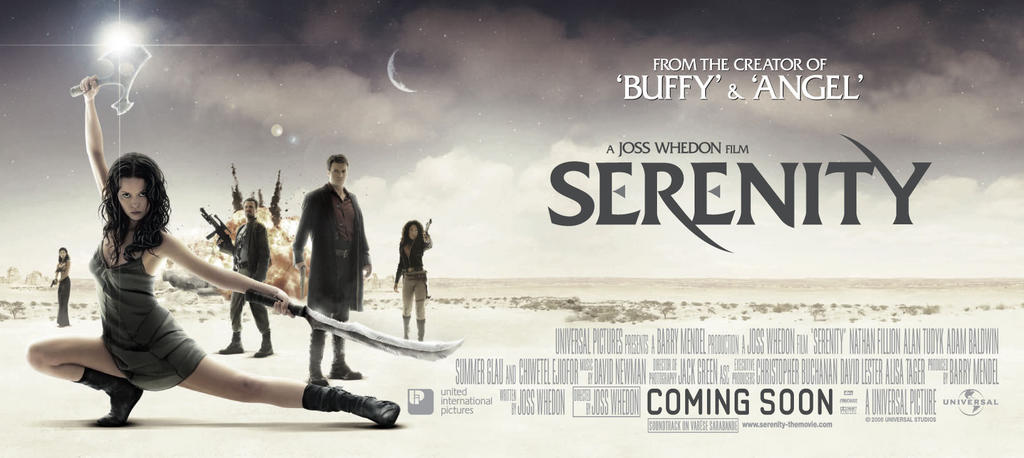
There's a good chance I'll be attending a preview screening of Serenity this Wednesday (whoops: Tuesday the 27th, not Wednesday). So far I have avoided all spoiler links and stories, and I will attempt to post a spoiler-free review shortly after the movie.
Friday, September 23, 2005
New Vernor Vinge novel
Vernor Vinge's forthcoming novel, Rainbows End, is due out by Tor Books in May, 2006. IEEE Spectrum excerpted a sample of the novel, Synthetic Serendipity, online a year ago. Now's as good a time as any to re-read this chapter.
Groan
Yesterday I added comments and permalinks via Blogger's dashboard, following instructions to the dot. It appears this action killed the time stamp on the posts, something I noticed only today. Not critical, I suppose, just irritating.
Updated: Time stamps have been fixed while retaining permalinks, I think. Also noticed a trio of comment-spam in the most recent post. It's like the squids in The Matrix; spammers pervade the entire system and eventually you're simply tracked down, with no EMP devide at hand to save you.
Updated: Time stamps have been fixed while retaining permalinks, I think. Also noticed a trio of comment-spam in the most recent post. It's like the squids in The Matrix; spammers pervade the entire system and eventually you're simply tracked down, with no EMP devide at hand to save you.
Isabel Paterson novel republished
Via Roderick Long's blog, news that Isabel Paterson's novel, Never Ask the End has been republished. According to Long, this novel is not political, yet Paterson is lauded as a good novelist.
Thursday, September 22, 2005
Now Reading: The Singularity is Near
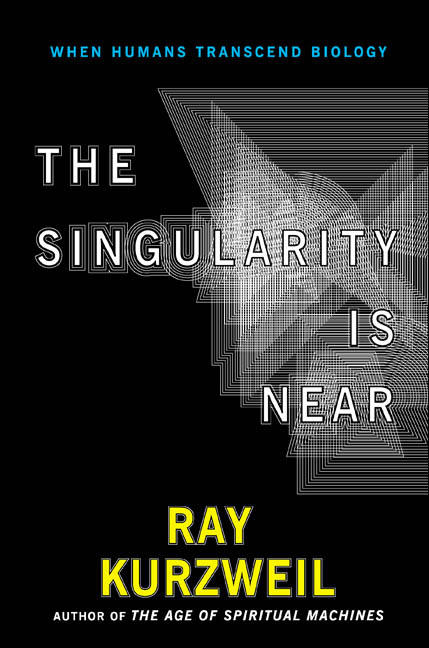
I received this tome by Ray Kurzweil in the mail recently. Can't say much since I just started reading it, but as a non-fiction science book it looks both exciting and intimidating. Some other recent books of similar interest include: Ramez Naam's More Than Human : Embracing the Promise of Biological Enhancement, Ron Bailey's Liberation Biology, Gregory Stock's Redesigning Humans: Our Inevitable Genetic Future, and Joel Garreau's Radical Evolution : The Promise and Peril of Enhancing Our Minds, Our Bodies—and What It Means to Be Human. I have a copy of Bailey's book, which is next on the reading list, and of the others Garreau's looks compelling.

Monday, September 19, 2005
Private settlers on Mars? "The horror!" cries Wired
Enjoyed this lovely quote from Wired magazine about a private company that wants to open a human settlement on Mars:
"Why should people live on Mars? And if it's going to be done, should a private enterprise engage in what would be one of humanity's defining moments?"The article brings up the old UN bombast about space existing for all humanity. Makes me think if the UN had been around a few thousand years ago we'd have this scenario: exploration and use of the oceans shall be carried out for the benefit and in the interest of all countries. End result? Everyone remains in place except for a few connected bureaucrats. We need off this planet, if only to ensure humankind's survival. The threshold for the technology of mass murder quickly falls year by year. Sows the seeds of humanity outward, and at least some people may escape. Only private enterprise will make it happen other than as a TV moment.
Friday, September 16, 2005
Do as we say, not as we do
Perhaps the members of Congress should study the Constitution more before madating a Constitution Day. If three-fourths of surveyed students think it's okay to censor the internet, no doubt the number in Congress is nine-tenth. The same can be said for the Supreme Court, which gutted the Fifth and Ninth Amendments with Kelo. Hey, throw in the Executive Branch, which summoned forth the Category Five State in the wave of Katrina. Yeah, I'm bitter.
Thursday, September 15, 2005
Hardyville Freedom FIlm Festival
Claire Wolfe lists 35 movies in several categories with vote by readers to determine the best libertarian movies. I question some of the choices and omissions--I mean, Minority Report stank--but others are most definitely classics. The most difficult choice for me fell in the Animated category, where three of the movies are in a dead tie. Jon Osborne used to have a great site on movies and liberty, but the last update he posted is dated over a year ago.
Thursday, September 08, 2005
Serenity Comic #3 Available Now
Wally Conger emailed to let me know he had purchased a copy today, so my reports a couple of days ago about the delay apparently were incorrect. I picked up all three versions of the new issue, and may post a complete review soon.
Wednesday, September 07, 2005
Tom Paine Maru e-book
L. Neil Smith's novel (Del Rey, 1984) is available again for sale as an e-book (PDF format) for five bucks. There's a brief note about this over at The Libertarian Enterprise, an electronic non-fiction newspaper published by Smith since 1995. Artist Scott Bieser's cover for Tom Paine Maru is, well, interesting. Margaret Atwood might nod her head upon seeing this cover, as if to confirm her own views of science fiction. Bieser, who also did the art for the the graphic novel version of The Probability Broach, recently launched a blog.
Tuesday, September 06, 2005
Serenity Comics Update
Just learned from some browncoat postings on fireflyfans.net that issue 3 of theSerenity comic books has been pushed back from September 9th publication date to September 13. Ah, the agony of the wait! Good news for collectors, though, as it appears the first issue is in it's third printing, and if you weren't able to get that John Cassaday cover, now's your chance.
Speaking of Serenity, the official movie site now is live. Requires Flash for some fancy behind the scenes stuff, and well worth spending a few moments of your time. I like Wash's statement, "Can I make a suggestion that doesn't involve violence. Or is this the wrong crowd?" Take a quiz and watch an "exclusive clip." Uh, no, not really; it's part of the trailer.
Speaking of Serenity, the official movie site now is live. Requires Flash for some fancy behind the scenes stuff, and well worth spending a few moments of your time. I like Wash's statement, "Can I make a suggestion that doesn't involve violence. Or is this the wrong crowd?" Take a quiz and watch an "exclusive clip." Uh, no, not really; it's part of the trailer.
Thursday, September 01, 2005
New L. Neil Smith short story
To quote Smith, "might strange bedfellows" he shares in this new sf anthology containing 16 short stories, Future Washington. Publication date is set for October. Kim Stanley Robinson and L. Neil Smith in the same book...
Wednesday, August 31, 2005
Regular programming will resume shortly
Blogging will be lighter than usual the next couple of weeks, as I am finishing up the print version of the Fall issue of Prometheus, contributing a couple of reviews as well as laying out all the Prometheus Awards reports, speeches, and photos.
Friday, August 26, 2005
Fall SF Movie Previews
From Revolution SF, some brief previews of this Fall's spate of SF related movies. No doubt this was written prior to the announcement that V for Vendetta's release date shifted to the Spring, but nonetheless, a tasty menu awaits.
Thursday, August 25, 2005
Noble Vision
In "Books That I Have Not Yet Read" Part II, the reason I was led to Stolyarov's novel was through his review of Noble Vision by Gen LaGreca. Already a nominee for the 2006 Prometheus Award (for best novel published in 2005), the web site calls Noble Vision a "medical suspense novel that delves deeply into the conflict in medicine today between private care and state." Another review, by Dr. Jonathan Dolhenty also is quite favorable. In addition, the Autonomist also mentions the novel, citing the book's publisher "Winged Victory Press, a Chicago-based independent press dedicated to publishing works that celebrate the American spirit of individualism." A second novel is forthcoming by the same publisher. Noble Vision can be purchased through Amazon.com.
A review in the pages of Prometheus is forthcoming this Fall. I corresponded briefly via email with LaGreca in 1998, and I fully intend to read this novel, despite the huge stack of books awaiting my attention.
A review in the pages of Prometheus is forthcoming this Fall. I corresponded briefly via email with LaGreca in 1998, and I fully intend to read this novel, despite the huge stack of books awaiting my attention.
Eden against the Colossus
From the "Books That I Have Not Yet Read" department comes this novel by Objectivist Gennady Stolyarov II. The blurb about Eden Against the Colossus contains several Objectivist keywords, such as "environmentalist mystics" and "intense advodate of Reason," and is available as an e-book for $10. Sarah Brodsky wrote an in-depth review in early July 2005. Since I have not read the book I can neither endorse nor warn against this work of fiction. However, as a skeptic, I wince at Brodsky's Randian kool-aid consumption when she makes statements like "an individualist must recognize that even in a futuristic utopia the cult of true womanhood still darkly shines through," meaning women must subject themselves to men in a Randian utopia. Give me Henrik Ibsen's women any time.
Monday, August 22, 2005
Ann Benson
With the fears of avian bird flu starting to reach critical mass in some blogs and publications, I think public health will become a huge topic of interest and probable area of government intervention in the year to come.
Ann Benson has written three sf/mystery/historical novels that deal with biology, plagues, government reaction to mass disease. In one novel Ayn Rand's Atlas Shrugged receives favorable mention, as does Galt's Gultch, the libertarian El Dorado where refugees from that novel flee the state. Thief of Souls, from 2003 is the most recent, but her two other novels, The Plague Tales and Burning Road are equally worthy, and should be read in that order.
SF Site interviewed Ann Benson back in 1997. As evidence of the web's evanescent nature, her own web page appears down, and the plague tales web site that she created seems defunct, too.
Ann Benson has written three sf/mystery/historical novels that deal with biology, plagues, government reaction to mass disease. In one novel Ayn Rand's Atlas Shrugged receives favorable mention, as does Galt's Gultch, the libertarian El Dorado where refugees from that novel flee the state. Thief of Souls, from 2003 is the most recent, but her two other novels, The Plague Tales and Burning Road are equally worthy, and should be read in that order.
SF Site interviewed Ann Benson back in 1997. As evidence of the web's evanescent nature, her own web page appears down, and the plague tales web site that she created seems defunct, too.
Minear on Heinlein's Harsh Mistress
An update on Tim Minear's project to adapt Robert A. Heinlein's The Moon is a Harsh Mistress mentions a second version of the script has been delivered to producers. This quote from Minear is quite illuminating:
Let's hope he manages to deliver a great picture that retains the best of this novel, translated to the very different medium of film.
"This is about a revolution. It's big and it has a lot of really complex political ideas. It's hard in that respect. How do you personalize this? There's a lot of talking in the book - theoretical talking about Libertarian ideals and political structure and that sort of thing - how do you take that and make it immediate and dramatic and emotional? How do you say that stuff through scenes and action, as opposed to characters sitting around and having a conversation? That's difficult.
"The other thing is to make sure the powers that be in Hollywood don't force you to turn it into some Marxist screed on socialism, when Heinlein was a Libertarian and it's about free-market capitalism. You want to try and not make it about an evil corporation. That's the trick."
Let's hope he manages to deliver a great picture that retains the best of this novel, translated to the very different medium of film.
Friday, August 12, 2005
New Victor Milan novel
More Firefly reviews
And another libertarian review of Firefly that cites another negative review. It looks like the anti-Firefly-for-political-reasons enjoy Star Trek and the Federation of Planets a lot more than the individualist world view of Mal's crowd.
Wednesday, August 10, 2005
Tuesday, August 09, 2005
Freedom and Firefly
Another writer notices the elements of freedom in Firefly. Some great comments, as well, and a link to a story that Tim Minear, the probable root of libertarian ideas in Firefly, is adapting Robert Heinlein's novel, The Moon is a Harsh Mistress.
Saturday, August 06, 2005
2005 Prometheus Awards
At the 63rd World Science Fiction Convention in Glasgow, the Libertarian Futurist Society announced the 2005 Prometheus Award winners. Best novel went to Neal Stephenson's The System of the World and the Hall of Fame Award went to A.E. van Vogt's The Weapon Shops of Isher. Special awards were given to The Probability Broach: The Graphic Novel, written by L. Neil Smith and illustrated by Scott Bieser, and to two anthologies edited by Mark Tier and Martin H. Greenberg, Give Me Liberty and Visions of Liberty.
Thursday, August 04, 2005
Aeon Flux
Via Wally Conger's blog, an image of the second most anticipated sf movie this year, Aeon Flux. I watched all the MTV episodes year ago, and Charlize Theron does look superb. 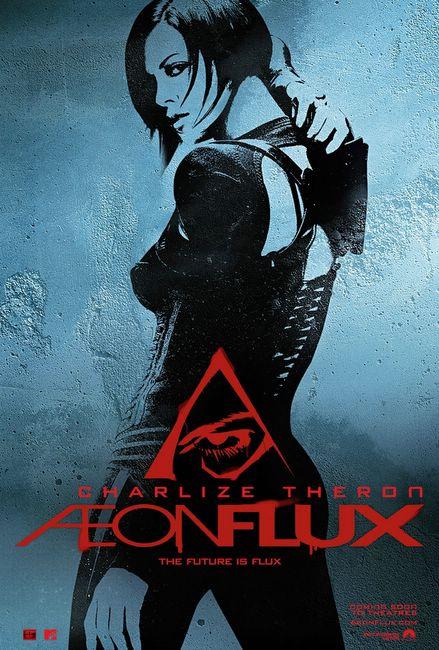
Serenity comics #2
The second installment of the Serenity comic book came out this week (8/4/05). I picked up the Jo Chen cover edition today, featuring Book. Sadly, the Jo Chen cover, featuring an elfish Kaylee was sold out. The story appears to fill in space between the last TV episode and the forthcoming movie. Page count is small, only 22 total pages per comic featuring panels with Serenity action, so this is barely enough to whet one's appetite while waiting for the movie.
Wednesday, July 27, 2005
James Hogan short story in Apex
A new short story magazine, Apex Science Fiction and Horror Digest recently published its first issue. I found issue number two at Barnes & Noble, and saw that it contains a novella by James P. Hogan. The novella, "The Falcon," deals briefly with an individual sentenced by her government for having the wrong ideas, and the temerity to not back away from those ideas.
Libertarians and non-libertarians
Over at Emerald City, Cheryl Morgan continues her bafflement with libertarians in a note about Charles Stross' Accelerando nominated for the Prometheus Award. Stross mentioned this fact in a forum post on 7/21/05, and on 7/27, Ms. Morgan muses about how "a British Liberal can be nominated for writing Libertaran fiction." The fact is that you don't need to be a card-carrying member of the Libertarian Party (US), and the Libertarian Futurist Society is in no way associated with the LP. The LFS recognizes works of fiction that deal with liberty and challenges authority of any individual over other individuals. This is not the only criteria for the Prometheus Award. Even Ken MacLeod, an avowed Marxist, show greater intellectual honsesty towards libertarians: they're not all crazed right wing lunatics...
Serenity Comics
The first issue of Serenity, the comic book, came out last week. I still have not found the John Cassaday Cover, which no doubt is quite popular, as it features Capt. Mal Reynolds.
Tuesday, July 26, 2005
Destroying Worlds novel
Today I received in the mail a copy of Destroying Worlds by John David, published in the UK. There was no return address, so no way to get back in touch with the sender and/or author (for which there is no biographical information on the book). I plan on reviewing this book in the Fall issue of Prometheus, which is scheduled for early-mid October. I'd like to send the author some copies of the issue with the review. If anyone knows how to get in touch with the author, please let me know.
Wednesday, July 20, 2005
Prometheus Summer 2005 published
Today all issues of Prometheus, Vol. 23, No. 4 (Summer 2005) were mailed to members of LFS and subscribers. The issue includes an article on Kurt Vonnegut's Player Piano, by Thomas Sipos; a review of F. Paul Wilson's latest Repairman Jack novel, Infernal, and much more. Mailed along with this issue was a special print version of the Summer 2004 newsletter, which originally appeared only in email form.
Monday, July 11, 2005
Vietnamese Writer Won't Be Silenced
From the New York Times, a great and inspiring story of Duong Thu Huong, a fiction writer in Vietnam who spits in the face of the regime, and refuses to leave while opposing and denouncing its very oppressive government.
Monday, June 20, 2005
Looney Catos or Clueless Wizards?
Cheryl Morgan from Emerald City on the Cato Institute:
Yes, indeed. That's freedom, folks. I shake my head in wonder and amazement.
I am, of course, familiar with the Cato Institute from my "real" job as an energy economist. They are the loony extremist wing of the free market movement and generally argue that no market should have any regulation, ever. It was interesting to actually meet a bunch of Cato Institute supporters. As I suspected, they tended to be very rich, deeply conservative, and strongly interested in protecting what they see to be important American freedoms, such as the freedom to take what you want, the freedom to exploit and opress others, and the freedom to kill anyone who gets in your way.
Yes, indeed. That's freedom, folks. I shake my head in wonder and amazement.
Monday, June 06, 2005
26 Years to Tell a Story
Via Reason's Hit and Run pages, and interesting article about Dave Sim and his 6,000 page comic book epic, Cerebus. I think it might be daunting undertaking to read 6,000 words of a comic book, let alone imagine the monomanic effort that went into writing this work.
Wednesday, June 01, 2005
More insults kick V for Vendetta movie
From Ain't it Cool News, a script review of V for Vendetta, and it's not a pretty result. Instead of the book, we probably will end up with "inspired by the title of the comic book" in the credits. All the excitement I felt upon hearing the original news about this movie has evaporated into this air. Not even Natalie Portman's presence can save this movie. A quote:
There is nothing sinister about the government. It isn't subtle and manipulative at all like the graphic novel presented it to be. It is Evil with a capital E, black bags over the head and everything. Pothrero is not the Voice of England, but a screaming voice, devoid of nuance and subtlety, a damning indication of elementary screenwriting by two hacks.
Tuesday, May 31, 2005
Alan Moore disavows V for Vendetta Movie
As reported by Comic Book Resources, noted writer Alan Moore sets the record straight on the movie adaptation of his graphic novel, V for Vendetta. I guess it was too much to ask when the producers spoke as if they had Moore's complete approval. Directors and producers of major movies rarely treat writers with any respect. Now the game becomes a question of how many changes are made, how the changes affect the story, and whether the political statements get toned down.
Monday, May 23, 2005
Zimbabwe Police Target Street Vendors
This has nothing to do with culture, but everything to do with liberty. I hope Robert Mugabe ends up in front of a firing squad at dawn for destroying a country. This latest crackdown shows yet again how a government has gone mad.
Thursday, May 19, 2005
Can color the sky
A glimpse at the forthcoming Serenity comic books from Dark Horse Comics. Scroll down the page. Via Claire Wolfe. Additional info from Scifi.com. Comic books due out July 6.
Tuesday, May 17, 2005
New Victor Milan novel
Via Victor Milan's website some news about a new novel, Deathlands. It's a series adventure novel, published under a pseudonym, but might be of interest to any Milan fans out there.
Monday, May 16, 2005
Conversation with James Hogan
Discovered an audio interview with James P. Hogan called Voices in Your Head, at IT Conversations. The interview can be downloaded or streamed (MP3 and MSWin). The site includes several other audio programs and interviews and seems well-worth some additional browser time.
New Libertarian roots
Tom Knapp reports on his "Google Bomb" efforts to reclaim Sam Konkin III's origin and meaning of new libertarian from some so-called neo-libs. An old interview with Konkin (who dies in 2004) can be found here. His "New Libertarian Manifesto" used to be available online, but now seems to have 404'd.
Thursday, May 12, 2005
RebelFire
Claire Wolfe and Aaron Zelman's new joint fictional effort appears interesting. Zelman collaborated on two novels with L. Neil Smith (The Mitzvah and Hope). Wolfe is more known for her non-fiction books. More info on Wolfe's blog.
Wednesday, May 11, 2005
Who celebrates libertarian fiction writers?
In Wendy McElroy's book review of Stephen Cox's recent Isabel Paterson biography, "Isabel Paterson and the Idea of America," she wonders:
Well, one group of libertarians has celebrated libertarian fiction for almost 25 years - the Libertarian Futurist Society.
Why has Paterson been so neglected? Or, more broadly, why did and does the libertarian movement — or radical individualism in general — not celebrate and embrace its fiction writers in the same manner as the Left? Upton Sinclair, Lillian Hellman, Max Eastman, John Steinbeck, Sinclair Lewis — these left-wing fiction writers were Paterson’s contemporaries. Like her, they had a dramatic impact on the culture and politics of their day. Unlike Paterson, they have claimed important niches in history, largely because of the attention of left-wing biographers and historians.
Well, one group of libertarians has celebrated libertarian fiction for almost 25 years - the Libertarian Futurist Society.
Laissez Faire Books vs. The Black Arrow
A firestorm ignites over at Sunni Maravillosa's site regarding Laissez Faire Books decision not to carry Vin Suprynowicz's novel, The Black Arrow. I have not read the book, so I cannot comment on the alleged "gratuitous vulgar sexual content" mentioned as the reason for not carrying the book. Nor am I as passionate about the book as some of its readers. I respect LFB's decision not to carry the book, and I also can understand the anger and outrage from the book's fans. For over 21 years I've supported and ordered books from Laissez Faire Books. I'll continue this, but LFB never has been the sole source for my books. Meanwhile, the book is available at the publisher (linked above) and Amazon.
Pippi Longstocking on the stage
Pippi Longstocking becomes a ballet. I read several of Astrid Lindgren's books as a child, and remember Pippi as a fun and strong character in several novels. It's amusing to read how she inspired fear in the establishment as an independent-minded child, and now is lauded as a hero of female liberation.
Politics at Cannes
Truth about movies and prizes at this year's Cannes Film Festival. Quoth director Gilles Jacob about Michael Moore's Fahrenheit 9/11, "it was a question of a satirical tract that was awarded a prize more for the political than cinematographic reasons, no matter what the jury said." Nah, really? And now we expect the jury to drop their politics this year? We are expected to believe that last year was an anolamy, perhaps brought about by the election year? I seriously doubt anything will change.
Friday, April 15, 2005
Saturday, April 09, 2005
John C. Wright Interview
Fantasybookspot has an interview with John C. Wright. Not sure of the date, although the preface mentions The Last Guardian of Everness, which the mention was nominated for the Prometheus Award "last month."
The Complete Robert A. Heinlein
Meisha Merlin goes all out for Heinlein, aiming to publish
The Definitive Collection of Robert A. Heinlein. The project consists of forty-six titles spanning Heinlein's entire career. I wonder if this has anything to do with the recent Vance Integral Edition, which published the definite Jack Vance? Via Reason Hit & Run via Boing Boing
The Definitive Collection of Robert A. Heinlein. The project consists of forty-six titles spanning Heinlein's entire career. I wonder if this has anything to do with the recent Vance Integral Edition, which published the definite Jack Vance? Via Reason Hit & Run via Boing Boing
Tuesday, April 05, 2005
Ishiguro Writes SF
A fascinating review from the New York Times of the new novel, Never Let Me Go, by noted Japanese writer Kazuo Ishiguro. Review forthcoming in the Summer issue of Prometheus, as the Spring issue was mailed to subscribers on April 5th.
Sunday, March 20, 2005
2005 Prometheus Award Finalists
The Libertarian Futurist Society posted the finalists for best novel and hall of fame awards.
Sunday, February 20, 2005
Apocalypse Nerd #1
Reason Magazine resident cartoonist, Peter Bagge, brings his own wacky art into a comic book, entitled Apocalypse Nerd. Serialized in six installments from Dark Horse Comics, Apocalypse Nerd also will feature a separate story on America's Founding Fathers.
Subscribe to:
Posts (Atom)


 Posts
Posts

